
Our daytime program is an ABA day program designed for our early learners, with a focus on social and communication skills, play skills, attending and readiness skills, and early academic skills. The program is based at our center in Egg Harbor Township, New Jersey.
For young children, learning happens through everyday experiences – playing, communicating, following routines, exploring new activities, and interacting with other people. Our daytime program creates a supportive environment where these experiences can become opportunities to build skills that help children become more confident and independent.
What Is an ABA Day Program?
An ABA day program is a structured daytime setting where young children receive ABA therapy as part of a routine day, with time for play, communication, group activities and early learning skills. Some families call it an autism day program.
At Crossroads ABA Center, the daytime program is ABA treatment delivered at our center for early learners. It is not a preschool or a school placement, and each child’s day is built around their treatment goals.
Who Is the Daytime Program For?
The program is designed primarily for early learners who may benefit from additional support before or alongside their transition into a school environment. Because every child develops differently, programming is based on each child’s individual abilities and needs rather than a one-size-fits-all curriculum.
Goals may include developing functional communication, participating in group activities, playing independently or alongside peers, following directions, transitioning between activities, increasing attention, and building early learning skills.
For some children, the focus may initially be on foundational skills such as communicating basic wants and needs or becoming comfortable with routines. Others may be ready to work on peer interaction, classroom readiness, or early academic concepts.
What Does a Typical Day Look Like?
The daytime program combines individualized ABA therapy with developmentally appropriate activities and opportunities to practice skills throughout the day.
A child’s schedule may include one-on-one instruction, play-based learning, communication activities, movement, social opportunities, structured routines, and practice with daily living skills. Activities are selected based on the child’s treatment goals and adapted as those goals change.
While there may be structure to the day, we also recognize the importance of keeping learning engaging for young children. Therapists can use a child’s interests and preferred activities to create opportunities for communication, social interaction, attention, and learning.
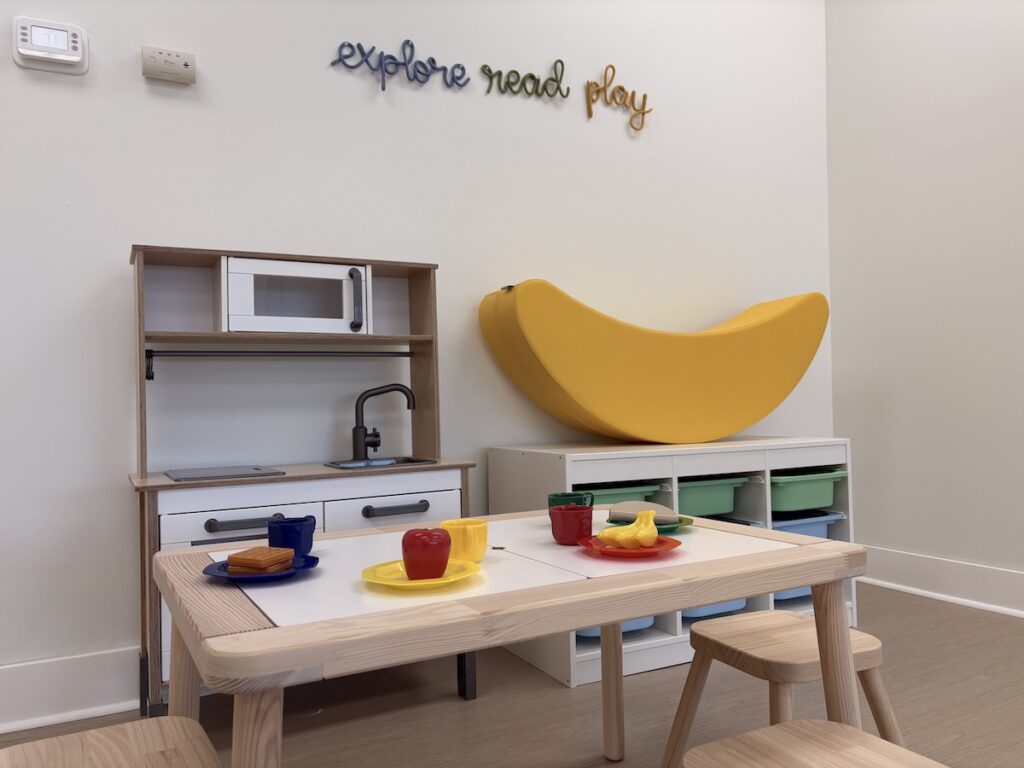
In our early learning room, children can enjoy pretend play in the play kitchen and gather at a child-sized table to play and learn. Your child’s BCBA sets the schedule and the number of hours.
Preparing Skills for the Next Environment
An important part of the program is helping children develop skills that can support them in future learning environments.
That might mean practicing sitting for a short group activity, following a simple routine, transitioning from one activity to another, communicating with adults and peers, waiting, sharing materials, or completing an age-appropriate task with greater independence.
Progress toward these goals is measured throughout treatment. Our clinical team reviews data regularly and adjusts programming based on what each child is learning and where additional support is needed. Families often pair daytime programming with parent and caregiver training so the same strategies are being used at home.
Working With Families
Families are important partners in the process. We share information about progress and can provide strategies that help parents and caregivers reinforce emerging skills at home and in the community.
Crossroads ABA Center is an out-of-network provider. Many families use their out-of-network benefits to help cover ABA services, and our team will help you verify your benefits and understand what your plan covers before services begin.
ABA services, including the ABA day program when clinically appropriate, may be covered by insurance. Coverage varies by plan, and our team can help families understand their benefits and any authorization requirements.
To learn whether the daytime program may be appropriate for your child, contact Crossroads ABA. Our team can learn more about your child’s needs, review insurance information, answer questions about the program, and explain the assessment and enrollment process.
Frequently Asked Questions
What ages is the daytime program designed for?
The program is built for early learners, generally children in the preschool years and those approaching a transition into a school setting. Because development varies so much at these ages, placement is based on an individual assessment rather than age alone.
Is the daytime program the same as preschool or school?
No. It is ABA treatment delivered during daytime hours, not an educational placement, and it does not replace a school program or an IEP. The focus is on the communication, social, play and readiness skills that help a child participate successfully in a classroom later on.
How many hours or days a week does my child attend?
Schedules are individualized and depend on your child’s treatment plan and what your insurance plan authorizes. Some children attend most of the week, while others attend part of the week alongside other services or a school program.
Can my child attend the daytime program and also attend school?
In many cases, yes. Families sometimes combine part-week daytime programming with a school placement or other services. Our clinical team can talk through how a combined schedule would work for your child and coordinate with the other providers involved.
How do you know when a child is ready for the next environment?
Readiness is measured against the individual goals in the treatment plan — things like sitting for a short group activity, following a routine, transitioning between activities, communicating with adults and peers, and working with greater independence. Our clinical team reviews that data regularly and discusses next steps with your family.
How does my child get started in the ABA day program?
Getting started begins with a conversation with our team. We learn about your child, review your insurance information, and explain the assessment and enrollment process. From there, your child’s BCBA completes an assessment and recommends a schedule.
Is the ABA day program covered by insurance?
It may be, when it is clinically appropriate and authorized under your child’s treatment plan. Crossroads ABA Center is an out-of-network provider, and many families use their out-of-network benefits. Coverage varies by plan, and our team can help you understand your benefits and any authorization requirements before services begin.
Ready to take the next step? Contact us today to schedule your consultation and begin your journey with ABA therapy.